
6-minute read
Executive Summary
Hospitals and clinics source oxygen through three primary models: cylinder delivery, bulk liquid oxygen, and on-site oxygen generation. Cylinder delivery and bulk liquid oxygen are similar in their reliance on a vendor for pricing, scheduling, and availability, while in-house generators allow facilities to produce and control their own oxygen supply right on-site. See below for the comparison of all three models regarding cost, supply autonomy, and scalability so hospital purchasing managers and facility directors can make informed oxygen supply decisions.
Table of contents
- Executive Summary
- Three Medical Oxygen Supply Models
- Cylinder Delivery: When Your Distributor Controls the Supply
- Bulk Liquid Oxygen: More Volume, Same Dependency
- On-Site Oxygen Generation: The In-House Advantage
- Hospital Oxygen Supply Comparison
- What This Means for Your Budget
- How Can You Reduce Medical Oxygen Costs
- FAQs
- About NOVAIR USA
Three Medical Oxygen Supply Models
A reliable, continuous supply of medical oxygen is crucial for hospitals and clinics. Not every facility sources their medical gas the same way. There are three primary oxygen supply models used in healthcare settings: cylinder delivery, bulk liquid oxygen, and on-site generation.
Each has a different cost structure, risk profile, and operational control level. Understanding the differences between the three is key to making a supply decision that works for your facility long-term, not just for the next delivery.
Cylinder Delivery: When Your Distributor Controls the Supply
The most familiar model is cylinder delivery. This is most common for smaller healthcare facilities. A vendor delivers pressurized oxygen cylinders based on a schedule, staff manages storage, and the facility pays per unit in addition to rental and handling fees.
The reality of cylinder delivery is that the distributor controls the schedule, pricing, and availability of your oxygen supply. When demand rises, vendor supply tightens, or a delivery is delayed, the burden falls on you.
It’s also rare to see the full cost of deliveries. Recurring expenses include charges for cylinder rentals, storage space requirements, and staff labor for tracking, handling, and swapping cylinders. That is not to mention that it is not always easy to know how much oxygen is still left in any cylinder before the technician will swap them out for a new one. These extra charges, in addition to fuel cost increases, make the total cost unpredictable, and can compound over time.
Oxygen cylinders may be a short-term solution for low-volume facilities with stable oxygen needs. But for growing businesses with increased oxygen demand or supply reliability concerns, delivery puts operational control in someone else’s hands.
Bulk Liquid Oxygen: More Volume, Same Dependency
Bulk liquid oxygen may appear to be the more practical fit for facilities with high-volume oxygen needs. With bulk LOX, a storage tank is installed on-site and refilled as needed or on a schedule. A larger, more continuous supply with less manual handling is the result, rather than dealing with individual cylinders.
There is an operational improvement with this, but dependency isn’t eliminated. It’s just scaled up.
Your facility still depends on a vendor to set pricing, manage delivery schedules, and maintain tank equipment. Your reliance on the vendor increases with minimum order requirements, tank lease agreements, and long-term supply contracts.
On-Site Oxygen Generation: The In-House Advantage
Generating oxygen on-site changes the equation entirely. Instead of managing delivery schedules and vendor contracts, your facility produces oxygen from compressed air using Pressure Swing Adsorption (PSA) technology.
Your facility controls when oxygen is produced, how much is stored, and how much to spend. The generator can run continuously for the price of standard electricity to produce the amount of oxygen needed to support operations, even filling cylinders to have on hand.
From a financial standpoint, on-site generation has a fixed operational cost that eliminates the unpredictable charges that come with cylinders and delivery. While an on-site generator initially requires a higher capital investment, the long-term cost structure is fundamentally different. There are no delivery fees, rental charges, or supplier price increases.
For hospital purchasing managers and directors evaluating long-term supply strategy, on-site generation is the only model where the facility makes every operational decision, keeping the already minimal maintenance costs down while saving all around from any recurrent hidden expenses. In house oxygen generation means you virtually pay a one-time up-front capital expenditure, then can recoup your costs for years to come by generating oxygen for the low price of very inexpensive yearly maintenance checks and the minimal electricity costs it takes to push the on button and run the generator.
Hospital Oxygen Supply Comparison
Discover how cylinder delivery, bulk liquid oxygen, and on-site oxygen generation differ in cost, control, and scalability in the chart below:
| Factor | Oxygen Delivery | Bulk Liquid Oxygen | On-Site Oxygen Generator |
|---|---|---|---|
| Cost control | Low | Medium | High |
| Supply autonomy | Low | Low | High |
| Upfront investment | Low | Medium | Higher |
| Long-term costs | High | Medium | Low |
| Scalability | Low | Medium | High |
| Vendor dependency | High | High | None |
Each facility must evaluate their needs and overall operating costs to compare with an overall picture, but generating oxygen on-site typically provides the highest control and lowest long-term costs for businesses, while eliminating vendor dependency.
What This Means for Your Budget
As shown in the table above, budget implications vary based on each model of oxygen supply a healthcare facility chooses.
Cylinder and bulk liquid oxygen are both recurring expense models that are never-ending. Hospitals pay indefinitely, with pricing set by the oxygen company. As patient volume and oxygen consumption grow, so does the invoice amount each month. Price adjustment, fuel surcharges, and handling fees are variables that are absorbed by your budget and can fluctuate month to month.
On-site generators have a capital investment model. While requiring a higher upfront cost, once the system is installed, the oxygen cost becomes predictable and manageable. You can plan your budget around minimal routine maintenance and energy costs that keep your system running. The unpredictable vendor fees disappear.
How Can You Reduce Medical Oxygen Costs
Every healthcare facility has different oxygen demand, infrastructure, and budget considerations. NOVAIR’s team can help you evaluate whether an on-site oxygen generator is the right fit and what that would look like for your operations. Speak with a US-based representative to get a quote.
| Speak with an expert to start using on-site oxygen. |
FAQs
There are three primary sources that hospitals source their oxygen from: cylinder delivery, bulk liquid oxygen, and on-site generation. Cylinder delivery and bulk liquid oxygen rely on a vendor to manage their supply while facilities can produce their own oxygen with on-site generation.
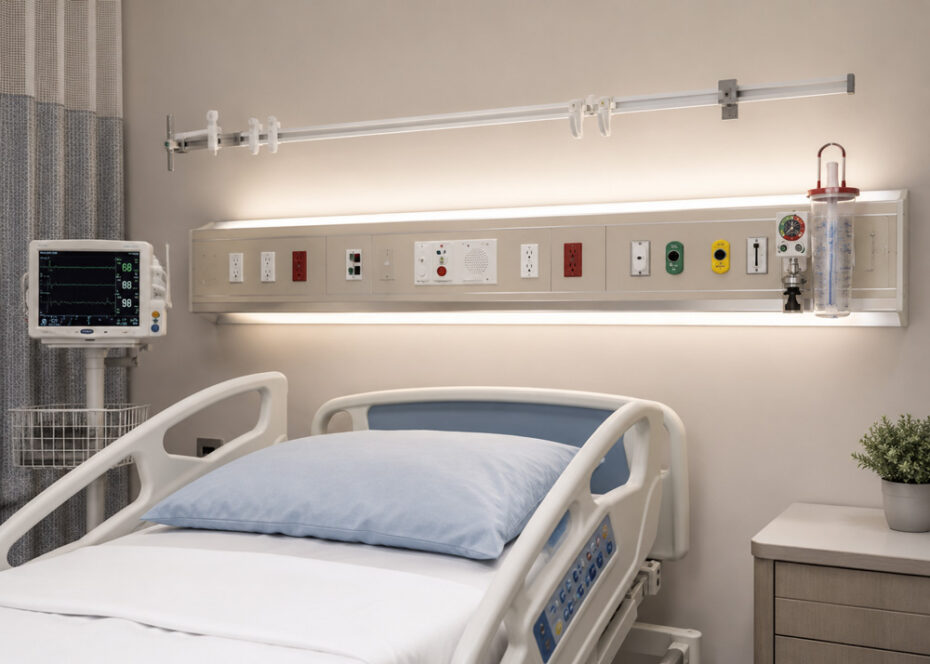
Oxygen reaches patients through medical gas pipeline systems connected to the facility’s supply source, cylinders, liquid oxygen, or an oxygen generator. The pipeline infrastructure distributes oxygen throughout the facility from the source through valves, alarms, and outlets. (High-quality US-made NOVAIR medgas pipeline systems are available for this).
Most on-site generators use Pressure Swing Adsorption (PSA) technology to produce oxygen at your desired purity, flow, and pressure. Throughout this process, zeolite or carbon molecular sieve gradually retains nitrogen from compressed air, allowing purified oxygen to pass through to the generator output while the nitrogen is safely sent back into the ambient air.
Yes. After evaluating your current oxygen consumption, infrastructure, and space requirements, NOVAIR works with your team to assess compatibility with existing systems and new configurations.
About NOVAIR USA
Headquartered in North Tonawanda, New York, NOVAIR USA, part of NOVAIR Groupe, is an industry leader in on-site oxygen generators for industrial and healthcare applications. NOVAIR has been manufacturing air and gas systems worldwide since 1977. Our reliable, USA-made solutions are designed for safety and predictable operating costs. We also serve multiple healthcare and industrial sectors with our nitrogen generators and medical gas equipment.
NOVAIR USA — On-Site Gas Generation Since 1977