
6-minute read
Executive Summary
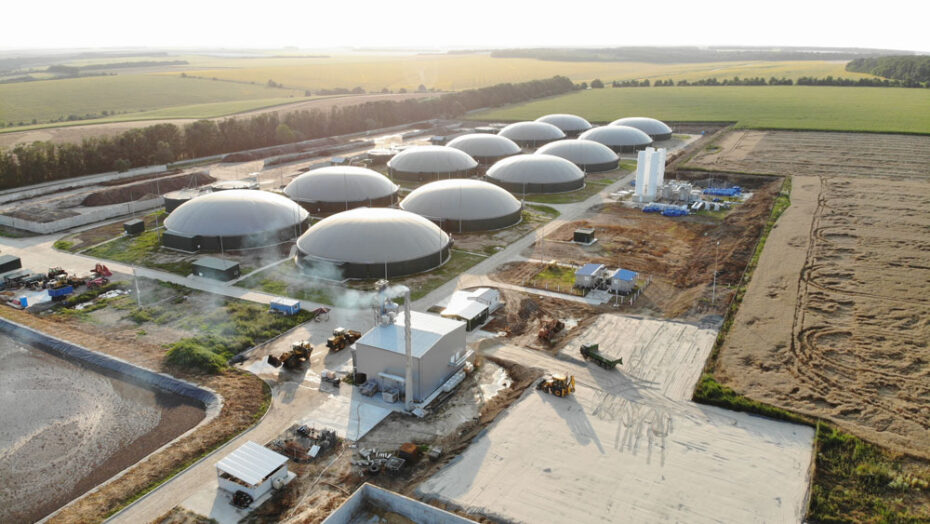
Biogas is a renewable fuel produced when organic waste breaks down. In its raw form, biogas may not be suitable for commercial use, requiring an upgrade to Renewable Natural Gas (RNG). This process includes using oxygen to remove H2S contamination. On-site oxygen generators are a reliable and efficient option to support the desulfurization. Dive into the role of oxygen generators during the process of upgrading biogas.
Table of contents
- Executive Summary
- What Is Biogas and How Is It Produced?
- Does Biogas Have to Be Upgraded to RNG?
- The Difference Between Biogas, Biomethane, and RNG
- How Is Biogas Upgraded to RNG?
- Why Use Oxygen Treatment in Biogas Upgrading Systems?
- How On-Site Oxygen Generators Support Biogas Upgrading
- FAQ’s
- Ready to Evaluate On-Site Oxygen for Your Biogas Facility?
- About NOVAIR USA
What Is Biogas and How Is It Produced?
Biogas is a product of anaerobic digestion, which happens when organic material is broken down in the absence of oxygen. This biological process can occur in agricultural waste, food scraps, wastewater solids, landfill waste, and animal manure.
The resulting gas is typically composed of 50-65% methane (CH4) 35-45% carbon dioxide (CO2), water vapor, hydrogen sulfide (H2S), and other trace compounds. Raw biogas can fuel combustion engines and boilers, but may not have enough energy value for larger applications. Therefore, treatment may be necessary to upgrade biogas into RNG before use.
Biogas production is often found in municipal wastewater treatment plants, livestock operations, landfills, and food processing sites. The gas found at each of these sites has a different mix of impurities. Because the chemical makeup is varied, each facility must use a unique treatment approach to upgrade biogas.
Does Biogas Have to Be Upgraded to RNG?
Not always. Raw biogas can be used directly for on-site heat and power generation through combined heat and power (CHP) systems, and many facilities combust it as-is to offset energy costs.
Upgrading to RNG becomes necessary for:
- Injection into a natural gas pipeline network
- Use as a vehicle fuel (compressed or liquefied RNG)
- Registration under federal or state renewable fuel programs, such as the EPA’s Renewable Fuel Standard (RFS) or California’s Low Carbon Fuel Standard (LCFS)
- Meeting utility interconnection specifications, which typically require 95%+ methane content
Facilities that upgrade can generate Renewable Identification Numbers (RINs) and LCFS credits, which significantly improve project economics. Industries with large-scale operations and high-volume organic waste should consider upgrading their biogas. These include dairy and hog farms, food and beverage processing facilities, and breweries. The EPA’s Landfill Methane Outreach Program (LMOP) provides a detailed overview of RNG and a technical reference document covering production pathways and end uses.
The Difference Between Biogas, Biomethane, and RNG
These three terms are often used interchangeably. However, biogas, biomethane, and RNG all describe different stages of the same product.
Biogas
Biogas is the raw product of anaerobic digestion or landfill decomposition. It contains methane, CO2, H2S, water vapor, and other impurities.
Biomethane
Biomethane is biogas that has been purified and upgraded to remove CO2 and contaminants, producing a gas chemically similar to fossil natural gas. The term is most common in European regulatory and technical contexts.
Renewable Natural Gas (RNG)
Renewable Natural Gas (RNG) is the North American equivalent of biomethane. Typically, RNG must meet pipeline tariff specifications, including 95-98% methane content and strict limits on moisture, H2S, and CO2.
The difference depends on the end use. A facility that burns biogas on-site has no obligation to meet RNG specs, but these requirements are necessary to sell to utilities or participate in fuel credit programs.
How Is Biogas Upgraded to RNG?
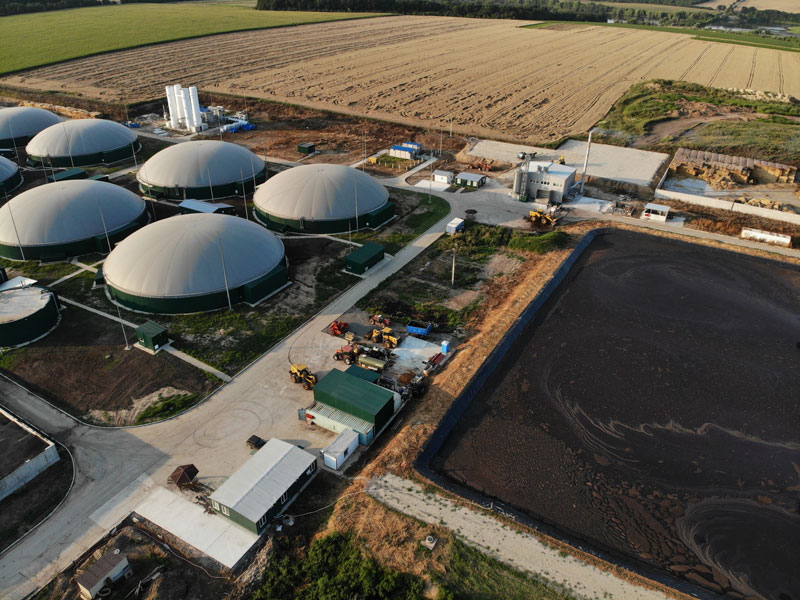
The upgrading process concentrates methane through the removal of CO2 and trace contaminants. Before the main separation stage, pre-treatment is required to eliminate the H2S, moisture, and siloxanes (silicone-based synthetic materials that may be harmful).
Commercially, four main technologies are used in the upgrading process:
Pressure Swing Adsorption (PSA)
Adsorbent materials selectively retain CO2 under pressure while methane passes through. PSA oxygen generators are modular and ideal for mid-sized facilities.
Water Scrubbing
CO2 and H2S dissolve into pressurized water. Though operationally simple, this technique requires significant water management.
Membrane Separation
Semi-permeable membranes separate CO2 from methane based on molecular permeability. This is done by compact systems with low moving-part counts, though multiple passes may be needed to hit target purity.
Amine Scrubbing
CO2 reacts with regenerable amine solvents in an absorption column. This is efficient at scale, with higher capital and operating costs than other methods.
Pre-treatment quality directly affects equipment performance and service life, which is why H2S control before the separation stage is a standard part of system design.
Why Use Oxygen Treatment in Biogas Upgrading Systems?
Oxygen is introduced at specific points in biogas systems to drive biological reactions that reduce H2S levels.
H2S is corrosive to compressors, membranes, and pipeline infrastructure. Oxygen is added to raw biogas before it reaches the upgrading equipment. Regulatory limits for H2S in pipeline-quality RNG typically range from 0.25 to 4 ppm, while raw biogas can contain hundreds or thousands of ppm.
Controlled micro-dosing of oxygen into the biogas encourages sulfur-oxidizing bacteria to convert H2S into elemental sulfur or sulfate, significantly reducing concentrations before gas treatment. Typical dosing levels range from 2-6% of the gas volume.
For more details about H2S formation and control during biogas treatment, explore our articles on in-house oxygen generator use in biogas production and preventing hydrogen sulfide formation with oxygen.
How On-Site Oxygen Generators Support Biogas Upgrading
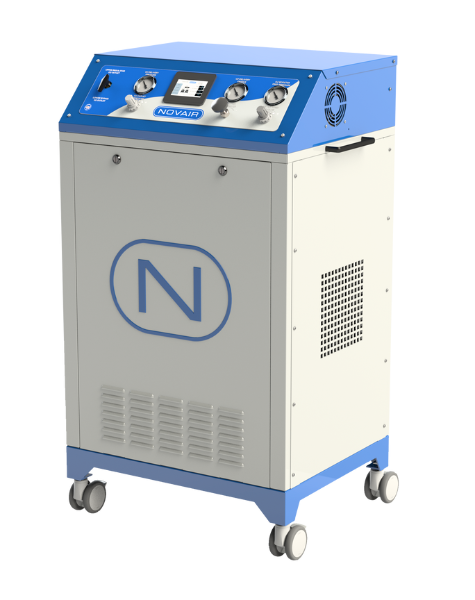
On-site PSA oxygen generators produce high-purity oxygen directly from ambient air, supplying the continuous, controlled flow that biological desulfurization requires without dependence on cylinder gas delivery.
Each facility has different oxygen requirements and structural layouts. A range of oxygen generators can be used based on these differences.
For biogas facilities, the practical advantages are straightforward:
Continuous Availability
Dosing conditions are consistent with a reliable oxygen supply. Delivery schedules and storage capacity are no longer an issue.
Adjustable Output
Flow rates match the specific demands of the desulfurization system, which is useful for facilities with variable gas production.
Lower Long-Term Operating Costs
Delivered oxygen has extra fees due to production, compression, and transport costs. On-site generation removes those recurring charges after the initial investment.
Reduced Handling Requirements
No compressed cylinders or bulk liquid oxygen storage to manage on-site.
NOVAIR USA’s oxygen generators are built for continuous industrial use. On-site generation easily integrates with common biogas system designs.
| Speak with a US-based representative to use on-site oxygen generation. |
FAQ’s
Biogas is the raw gas produced from anaerobic digestion, containing methane, CO2, H2S, moisture, and trace compounds. Biomethane is that gas after purification and upgrading, producing a result chemically similar to natural gas.
Both terms refer to upgraded biogas. Biomethane is standard terminology in European regulatory contexts; RNG is used in North American fuel and pipeline standards. Both must meet pipeline quality specifications, generally 95-98% methane.
Raw biogas contains CO2, H2S, water vapor, siloxanes, and ammonia alongside methane. H2S is the most operationally significant contaminant due to its corrosivity and its strict concentration limits in RNG and pipeline specifications.
H2S corrodes compressors, membranes, and scrubbing systems used in the upgrading process. Most technologies require H2S reduced to low ppm levels before the gas enters the separation stage, making pre-treatment a standard part of any RNG upgrading system.
PSA oxygen generators produce oxygen at 90-95% purity from ambient air on a continuous basis. That oxygen is micro-dosed into the biogas to feed sulfur-oxidizing bacteria, which convert H2S into elemental sulfur or sulfate. On-site generation gives operators a controllable, uninterrupted supply without cylinder deliveries or bulk storage logistics.
Key Takeaways
- Biogas is produced through anaerobic digestion and contains 50-65% methane as well as other impurities like CO2 and H2S, which must be removed for higher-value use.
- Raw biogas can be used for heat and power but it must be upgraded to RNG for vehicle fuel, state and federal renewable fuel programs, etc.
- Biogas, biomethane, and RNG refer to the same product at different stages of treatment. Biomethane is a European term while RNG is the North American standard.
- Upgrading biogas can involve PSA technology, water scrubbing, membrane separation, or amine scrubbing. H2S pre-treatment must be done first before upgrading with these techniques.
- Oxygen treatment improves gas quality by promoting biological desulfurization to remove H2S.
- On-site PSA oxygen generators provide a continuous, adjustable oxygen supply for biogas treatment systems without reliance on delivery or cylinder storage.
Ready to Evaluate On-Site Oxygen for Your Biogas Facility?
NOVAIR USA manufactures industrial on-site oxygen generation systems designed for continuous-duty applications, including biogas upgrading and desulfurization. Contact our team to discuss your facility’s gas volume, oxygen demand, and how on-site generation fits your upgrading infrastructure.
About NOVAIR USA
Headquartered in North Tonawanda, New York, NOVAIR USA, part of NOVAIR Groupe, is an industry leader in on-site oxygen generators for industrial and healthcare applications. NOVAIR has been manufacturing air and gas systems worldwide since 1977. Our reliable, USA-made solutions are designed for safety and predictable operating costs. We also serve multiple healthcare and industrial sectors with our oxygen generators and medical gas equipment.
NOVAIR USA — On-Site Gas Generation Since 1977
Follow us: LinkedIn | Facebook | Instagram | X | YouTube