

It is essential to understand the required oxygen levels in aquaculture. Fish and crustaceans need an oxygen-rich environment to survive and thrive. Just as land animals need air to breathe, fish absorb oxygen through their gills to perform vital functions such as metabolism regulation, digestion, and movement.
Fish can be prone to oxidative stress if the oxygen levels area too low. Oxidative stress can lead to stunted growth and possibly mortality. Low oxygen levels also disrupt filtration and biofiltration processes due to degraded water quality. Therefore, it is important for fish farmers to understand the oxygen levels best suited to their system, and how to maintain them.
What Influences Oxygen Demand in Aquaculture?
- Species being raised
- Biomass and size of the animals
- Water temperature and salinity
- Feeding rate and frequency
- Type of system (for example RAS or flow-through)
While these variables are interrelated, one parameter stands out as a reliable indicator of oxygen demand: the quantity of feed.
Why? Because feed quantity reflects all of the factors above. Nutritional requirements are well documented for most fish and shrimp species, and feeding tables are typically adapted to water temperature and fish size. In essence, feed quantity is the best representation of an animal’s metabolic activity.
Feed-to-Oxygen Ratio
A commonly used rule of thumb in aquaculture is that 1 kg of feed requires around 350 g of oxygen for the fish or shrimp to metabolize it.
So, if you feed 10 kg of feed in a tank per day, the stock will consume approximately 3.5 kg of oxygen daily.
Keep in mind that oxygen consumption usually peaks shortly after feeding. However, when using automatic feeders that distribute smaller meals throughout the day, oxygen demand tends to smooth out, reducing peaks and stabilizing oxygen levels.
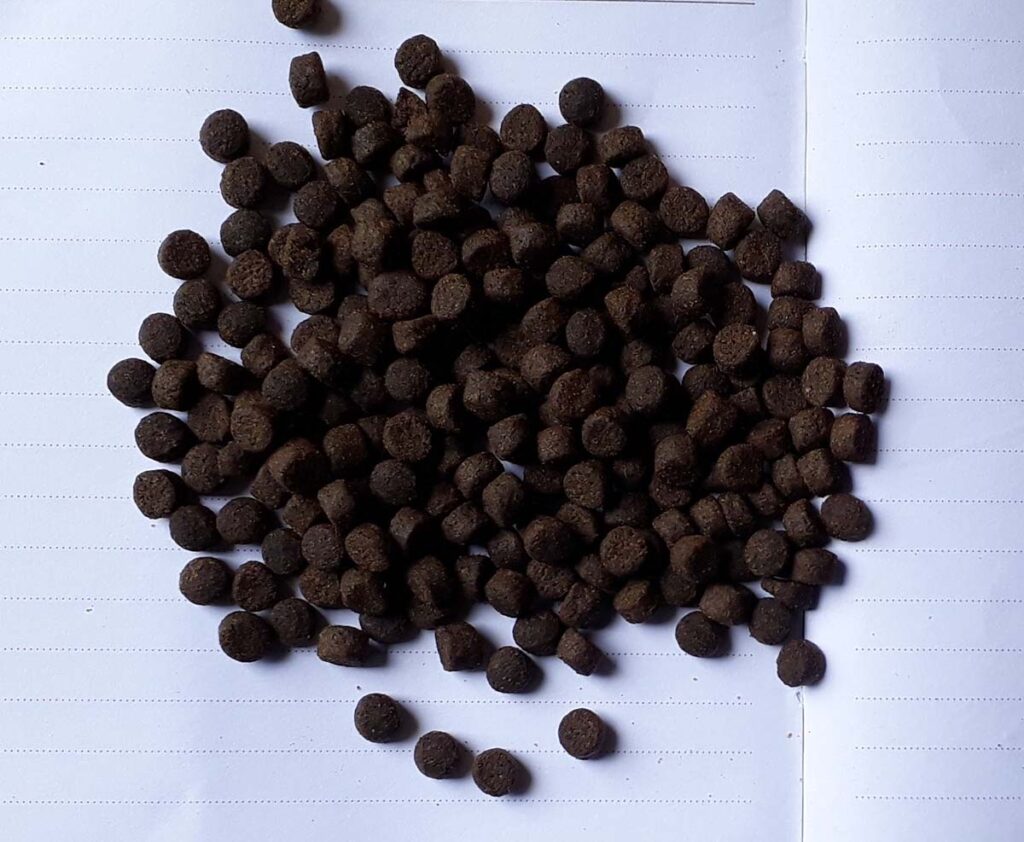
The Special Case of RAS (Recirculating Aquaculture Systems)
RAS are closed-loop systems where water is continuously filtered and reused, making them highly water-efficient and suitable for high-density farming. However, because the water remains in the system longer, biological activity increases, especially due to bacteriological activity.
In RAS, the total oxygen consumption per kilogram of feed is estimated to be about 1 kg. This includes:
- 350 g for fish or shrimp respiration
- 650 g for microbial respiration in the biofilter
This increased demand is mainly due to the nitrifying bacteria in the biofilter, which oxidize ammonia and other waste products. Most RAS systems use Moving Bed Biofilm Reactors (MBBRs), where aeration is used for the movement of the filter while also supplying it with oxygen.
Example: Oxygen Demand Calculation in a RAS Tilapia Farm

Let’s consider a RAS tilapia farm with the following setup:
- 10 tanks, each 50 m³
- Total biomass: 25 tons of 25 g juvenile tilapia
- Stocking density: 50 kg/m³
- Water temperature: 25°C
- Feeding rate: 3% of biomass per day → 750 kg of feed per day
Oxygen Requirement Breakdown:
- Fish respiration: 35% → 262.5 kg/day
- Biofilter bacteria: 65% → 487.5 kg/day
- Total system oxygen demand: 750 kg/day
Biofilter Aeration Requirement
Aeration in the biofilter supplies the 487.5 kg of oxygen needed. Given that:
- Air contains ~20% oxygen
- Dissolution efficiency of aeration in MBBR is ~5%
You’ll need approximately:
41,666 m³ of air per day, or 1,736 m³/hour
(We’ll go into the details of biofilter sizing and operation in a future article.)You’ll need approximately:
Tank Oxygenation
Assuming the water exiting the biofilter is fully saturated with oxygen (100%), the fish will need to be with enough oxygen to cover their consumption of 262.5 kg/day, or about 11 kg/hour.
Oxygen Supply in Normal Operation
Let’s say oxygen is introduced using a low head oxygenator with an 80% dissolution rate:
- Required oxygen input = 11 kg/hour ÷ 0.80 = 13.75 kg/hour
Oxygen Supply in Emergency Mode
Oxygen is introduced by ceramic diffusers, with a dissolution rate of 20%, in the event of a power failure
Required oxygen input = 11 kg/hour ÷ 0.20 = 55 kg/hour
In Summary
- The feed quantity is a reliable indicator of oxygen demand.
- 1 kg of feed ≈ 350 g of oxygen in open systems; up to 1 kg of oxygen in RAS due to bacterial activity.
- Properly sizing oxygen supply systems—including emergency backups—is key to stable operation.
- Aeration systems in the biofilter must be sized correctly to handle microbial demand.
See full article here.
Keep in touch with NOVAIR USA!
Stay up-to-date by following our socials: LinkedIn | Facebook | Instagram | X | YouTube
For more information about NOVAIR’s impact on the aquaculture industry, contact us by filling out a brief contact form, emailing info@novair-usa.com, or calling +1 (716) 564-5165.