6 min. read | Reviewed by NOVAIR Engineering Team
Executive Summary
Nitrogen is the key for clean and sharp laser cuts. This article breaks down the core requirements to achieve just that: purity, pressure, and flow rate. You’ll learn how to choose what best fits your facility to optimize quality, efficiency, and cost savings.
Table of contents
At a glance: Nitrogen Requirements
Using nitrogen for laser cutting means optimizing your operations for what metal is being cut. Ranges are based on the type and thickness of metal.
How much nitrogen does a laser cutter use? While it ranges based on your application and OEM cut charts, there are some general guidelines:
- Purity: commonly 99.9% to 99.999% N2
- Pressure: can range from 10 to 30+ bar (145 to 435+ psi)
- Flow Rate: varies significantly based on nozzle size and material thickness
- Ex. NOVAIR’s NITROSWING can deliver 2.07 SCFM to 335.48 SCFM (~3.5 to 570 m3/h) with ability to scale modular systems for single fiber machines to whole facilities
Why is nitrogen used for laser cutting?
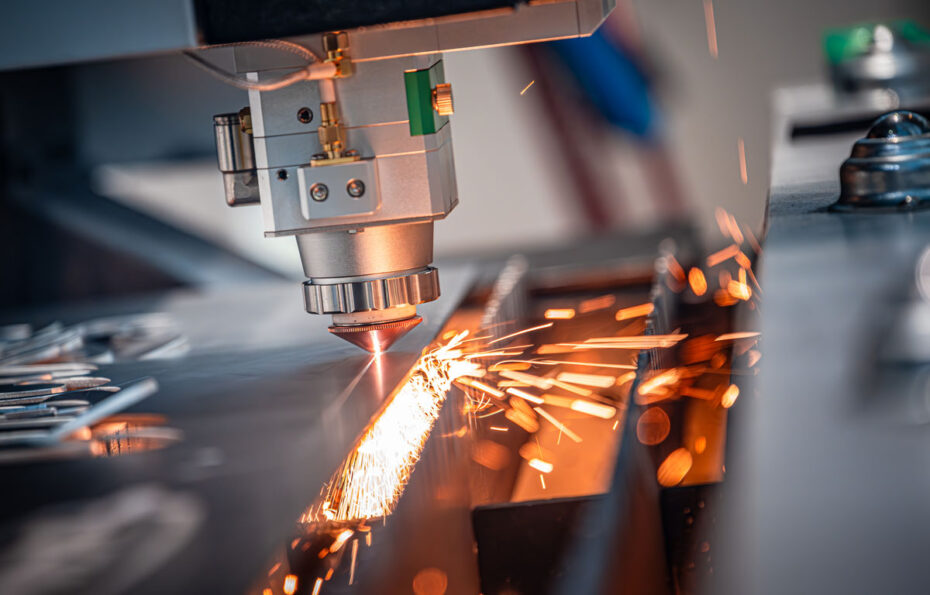
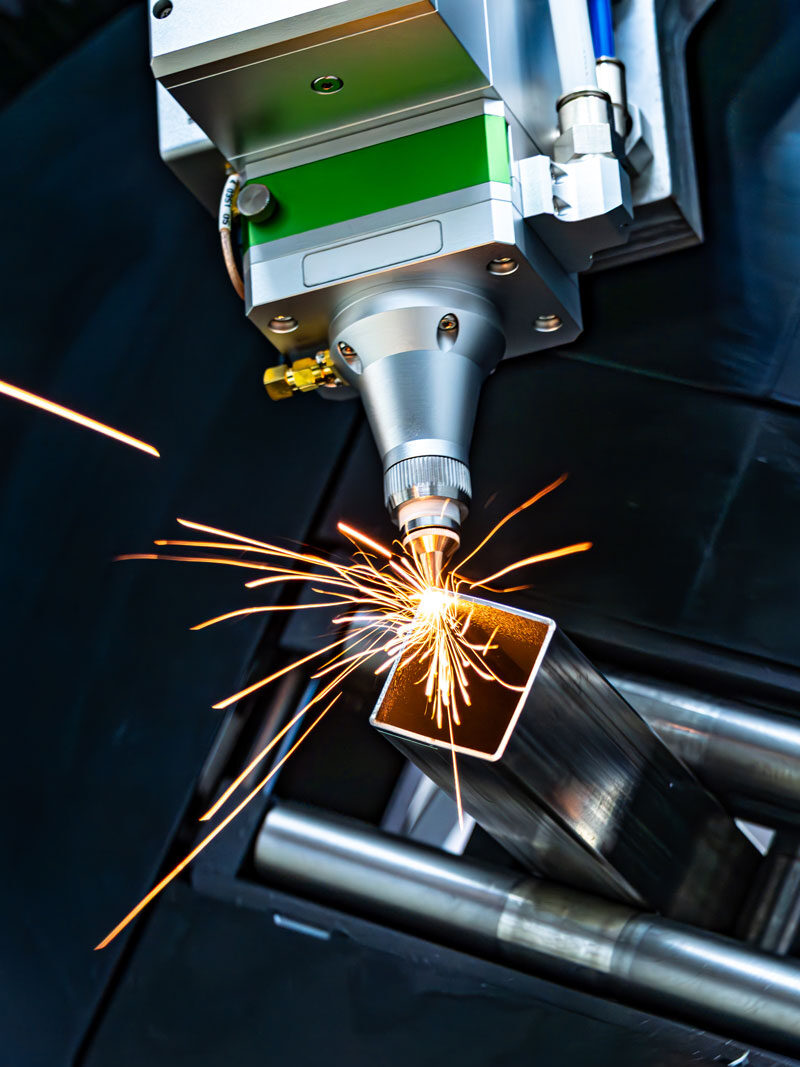
Top quality laser cutting can only be achieved if your metal is smooth, polished, and precise. Nitrogen is the answer to ensuring this happens every time. Simply put, nitrogen is used in laser cutting to create clean edges, high-quality, precise cuts, prevent oxidation, and increase efficiency.
When oxygen is used for laser cutting, heat creates a chemical reaction that is like burning the metal. The metal may darken or have a rough edge because of this, which then requires post-processing to smooth it out.
In laser cutting, nitrogen increases productivity in a shorter amount of time. Because the cuts are so precise, and no oxidation occurs, the metal is finished right away with less potential for damage. While post-processing may be necessary for lasers that use compressed air or oxygen, there are no rough edges or dark spots to be fixed when nitrogen is used. Also, using a nitrogen generator to produce gas on-site is even more cost-effective with the lack of gas delivery contracts and fees.
What are the ideal nitrogen purity levels for laser cutters?
One of the requirements to consider when choosing a nitrogen supply is the gas purity.
This nitrogen purity can range from 99.9% up to 99.999%. Lower purities may be used for metals like mild steel and aluminum depending on the thickness, cut settings, and desired edge finish. For best results, refer to your laser manufacturer’s OEM cut data as a starting point.
NOVAIR understands that filtration is a key factor in ensuring the cleanliness of the gas. We employ multiple stages of filtration in all of our setups. While purity can be high with the gas being composed of 99.9% to 99.999% nitrogen molecules compared to oxygen or other gas, it also needs to be clean. Clean nitrogen means it is free from contaminants like oil, water vapor, and other particulates. Cleanliness is key to mechanical integrity, affecting laser lens life, nozzle clogging, corrosion, and surface defects.
Nitrogen pressure for laser cutting
Nitrogen pressure directly affects how consistent and clean the edge turns out to be. In general, thicker metals are associated with higher pressures.
- Thin sheet metals up to 3mm often require about 10-16 bar (~145-350 psi)
- Thicker metals, 10mm+, could require up to 22-30+ bar (~319-435+ psi)
It is important to note that ranges vary depending on your laser manufacturer’s OEM cutting data, metal type and thickness, and your targeted edge finish. Thicker carbon steel is typically cut with oxygen, which uses lower pressures and may create a rougher edge. If you’re laser cutting mild steel with nitrogen, the pressure requirements are higher, reducing oxidation for a cleaner edge finish.
Additionally, the pressure at the machine inlet may need to be higher than the cutting pressure at the nozzle to make up for possible losses through piping, regulators, valves, and filtration along the way. For this reason, NOVAIR’s NITROSWING® LASERPACK includes a buffering strategy. The medium output pressure goes up to 35 bar (508 psi), and high pressure is up to 300 bar (4,351 psi). This ensures your laser cutting machine can make the precise cuts needed, no matter what type of metal or thickness you’re using.
Flow rates for laser cutters
Flow rate is another nitrogen requirement that is key to maintaining a clean and consistent edge. Similar to pressure, nitrogen flow demand generally increases with metal thickness.
Metal type, thickness, and nozzle selection must be taken into account when determining the best flow rate for your application. After these considerations, start by referring to your OEM data as a baseline for recommended settings.
Nitrogen generators may offer a wide range of nitrogen flow rates. When cutting thin sheets, the required flow will be on the lower side, and higher-demand cutting applications like thicker materials and piercing will be on the higher end of the range.
For example, NOVAIR’s NITROSWING® LASERPACK can achieve flow rates from 2.07 SCFM to 335.48 SCFM (~3.5 to 570 m3/h). This range accommodates smaller single laser fiber machines as well as a full-facility supply. For the most accurate flow requirement for your facility, speak with an expert about your material, nozzle setup, and laser cutting application details.
How do I size my nitrogen generator?
Take your typical highest-demanding jobs and estimate the nitrogen purity, pressure, and flow based on the information above, confirming them with your laser manufacturer’s OEM cut charts for your specific application.
Once your nitrogen requirements are determined, it’s time to map out how a nitrogen generator can fit into your facility. NOVAIR’s generators are truly modular, leaving room for growth so that your generator can expand with your operations over time. Smaller systems have a compact footprint, making it easy to integrate without taking up too much floor space. Speak with a representative to determine which size generator is right for you and your operations.
FAQ’s
NOVAIR nitrogen generators vary in cost depending on your facility’s oxygen requirements. Please speak with a US-based representative to obtain a personalized quote.
NOVAIR NITROSWING® generators use Pressure Swing Adsorption (PSA) Technology. PSA is one of several technologies currently in use for separating nitrogen from air.
NOVAIR’s nitrogen systems require minimal routine maintenance. There are several preventative maintenance programs to keep your generator running at optimal performance, varying in cost.
The size of the air compressor for a PSA nitrogen generator has to be factored for site elevation. Higher elevations will require a larger air compressor.
| Speak with an expert to determine your nitrogen requirements today. |
About NOVAIR USA
Headquartered in North Tonawanda, New York, NOVAIR USA, part of NOVAIR Groupe, is an industry leader in manufacturing on-site nitrogen generators for industrial applications, including laser cutting and metal fabrication. Our reliable, USA-made solutions are designed for safety and predictable operating costs. We also serve multiple healthcare and industrial sectors with our oxygen generators and medical gas equipment.
Follow NOVAIR USA: LinkedIn | Facebook | Instagram | X | YouTube